Summary
- U.S. CEOs are betting on a thaw with China. A delegation of top American executives across tech/semiconductors (NVIDIA, Tesla, Micron, Qualcomm, Apple), financial services (Goldman Sachs, BlackRock, Blackstone, Citigroup), aerospace and industrials (Boeing, GE Aerospace), and consumer staples (Cargill) joined the U.S. delegation to China — signaling that improved trade relations could unlock substantial revenue opportunities for these firms, even though markets haven't strongly priced in the upside yet.
- Market reaction was muted but sector-specific. Broad U.S. indices (S&P 500, NASDAQ, Dow, Russell 2000) posted only small or flat moves, but sectors tied to the delegation — particularly semiconductors (+2.38%) and technology (+0.94%) — outperformed(Source: TIKR), suggesting any growth from the talks is likely to be concentrated rather than broad-based.
- AI chips are America's strongest bargaining lever. China's manufacturing strength is largely domestically oriented (high-speed rail, EVs and batteries, solar/wind, fintech), which limits the volume upside for U.S. firms from a pure trade deal. The U.S.'s real leverage is on the supply side — export-ready AI semiconductors from NVIDIA and AMD, currently restricted by export controls, that China's tech sector wants access to.




Thu, May 14
4 min
SGFX research desk
S&P500, NVIDIA, and Tesla Gained as Top CEOs Join U.S. Delegation to China
S&P500, NVIDIA, and Tesla Gained as Top CEOs Join U.S. Delegation to China
Risk Warning: The information in this article is provided for general informational and educational purposes only. It does not constitute investment advice, a personal recommendation, an offer, or a solicitation to buy or sell any security, financial instrument, or product. Investing in equities, indices, ETFs, and other financial instruments involves a significant risk of loss and is not suitable for every investor.
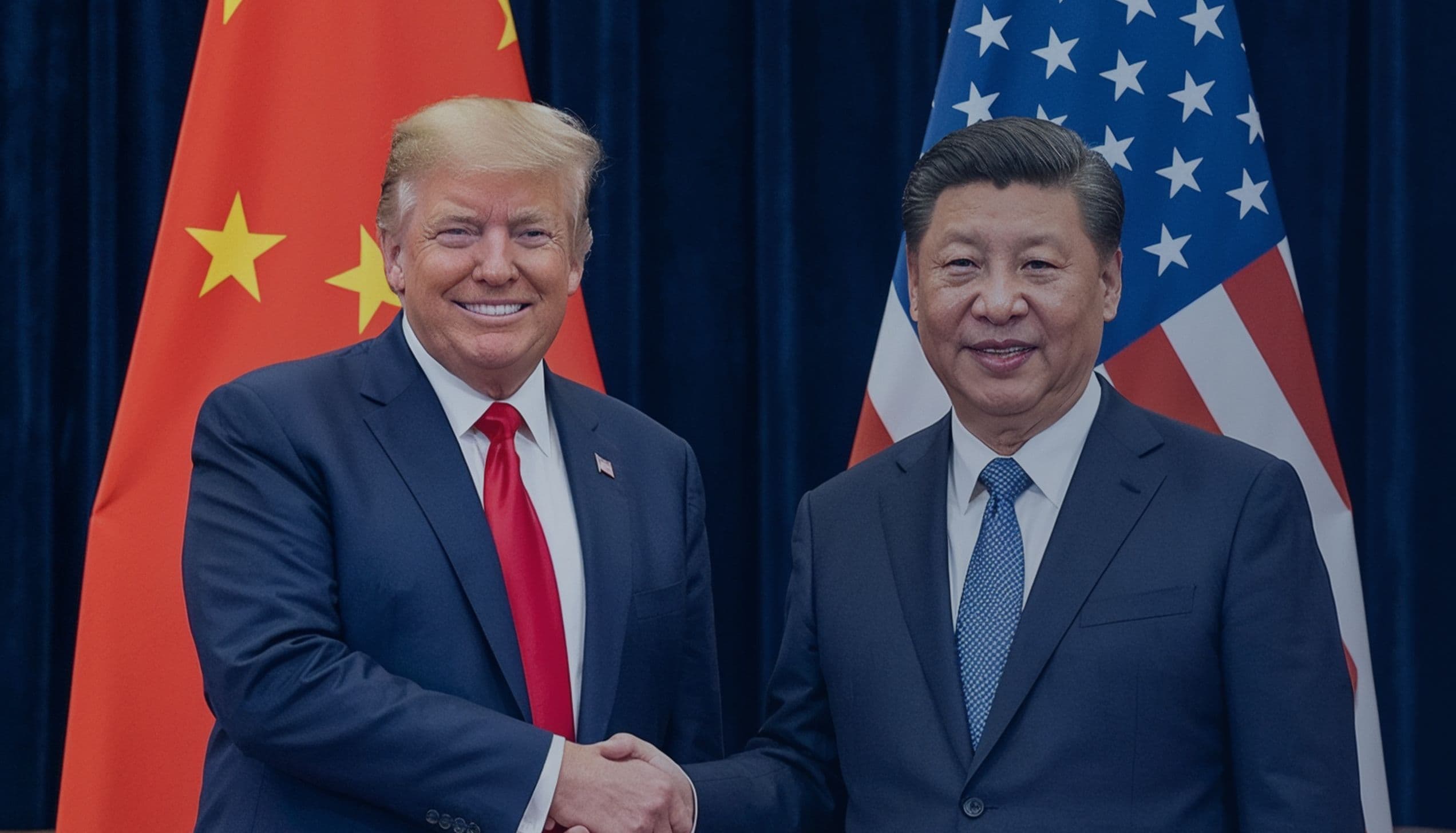
The S&P500, while pulling its weight in daily gains, may not be pricing in events of the U.S. delegation in China. On the other hand, CEOs of top U.S. companies are pulling their weight by turning up.
The issues on the table are mostly trade-focused but each of these business leaders have something to gain, as favorable relations with China could potentially mean unlocking substantial revenue for these firms. While it may not be possible to track growth from a favorable outcome to these talks, here are the sectors represented by these CEOs who came as part of the delegation (Source: Bloomberg).
- Technology and semi-conductors: NVIDIA, Tesla, Micron-Technology, Qualcomm, Apple
- Asset management firms and Financial services: Goldman Sachs, BlackRock, BlackStone, Citigroup
- Industrials, Aerospace and Defense: Boeing, GE Aerospace
- Consumer Staples: Cargill
U.S. and China relations have soured over multiple issues in the past. Tariffs and past trade wars between the two countries have kept growth prospects for a lot of these companies stifled.
The S&P500 index posted a small but stable growth of 0.56% alongside the NASDAQ, Dow Jones, and the Russell 2000 which either stagnated or grew. The mixed-to-positive response of U.S. stock market indexes indicates if there is growth, it can be found in specific sectors. (Source: TIKR)
With AI now on the negotiating table, the discussions between the two super-powers have to take on one more element: supply deals for tech focused manufacturing. Both countries have something to give to each other in terms of synergies. China offers significant manufacturing capabilities while U.S. tech firms have a quality standard they usually apply to their products.
There are a few obstacles to consider here. Chinese-focused manufacturing for the most part caters to Chinese clientele. Take a few examples of Manufacturers and their biggest clients.
For instance, COMAC (Commercial Aircraft Corp of China) supplies mostly to national airlines such as Air China, China Eastern, China Southern. Apart from select regional airlines in South-East Asian countries, their client base is largely domestic. Consider Boeing, which maintains a global footprint selling to over 150 countries.
This line of reasoning can be applied to multiple sectors in China, and the result is the same: Chinese companies first sell to Chinese companies and then the rest of the world while the U.S. maintains a more global footprint. Here are some sectors in which China largely caters to its own market, the latter two of which America has a competitive advantage:
- High-speed rail systems
- Renewable energy products such as electric vehicles, lithium-ion (EV) batteries, and solar & wind power systems.
- Digital & Fintech services
Despite the numerous roadblocks that could occur, the market continues to bet heavy on firms with AI-expertise such NVIDIA and Tesla, both of whose CEOs formed part of the U.S. delegation.
- NVIDIA: $225.83 (+2.29%)
- Tesla: $445.27 (+2.27%)
Final outlook
That means the U.S. will have to offer more than favorable terms if they’re going to set up higher-volume trade deals. But the U.S. has a strong advantage here: Semi-conductor chips focused towards powering AI infrastructure.
NVIDIA’s CEO Jensen Huang has repeatedly said that China would benefit by having access to its export-ready AI chips, export controls stand in the way of many Chinese companies obtaining access to a newer, more international, and better range of semiconductor chips. AMD too has an export-ready version.
China remains a critical market for semiconductor manufacturing companies, the second largest market for export-ready chips from American large-cap technology firms.
Disclaimer: This article reflects the views and analysis of the author at the time of publication and is based on information believed to be reliable from publicly available sources. SGFX makes no representation or warranty, express or implied, as to the accuracy, completeness, or timeliness of the information contained herein, and accepts no liability for any loss arising from reliance on it.
Stay Ahead of the Market
Subscribe for the Latest Trading News
Get expert insights, market news, and updates straight to your inbox.