Summary
- India is curbing gold imports to protect forex reserves — A new 15% import duty on gold and silver, plus a government push to halt mass gold purchases, is aimed at preserving U.S. dollar reserves for essential imports like oil and gas. Current reserves cover about 10 months of imports.
- The rupee is weakening sharply against major currencies — The INR has lost over 10% in value year-on-year against the USD, EUR, GBP, NZD, and notably the AUD (which gained 25.44%), eroding purchasing power and amplifying import costs.
- Short-term pain for jewelry, but demand will rebound — Stocks like Titan and Kalyan Jewelers have taken a hit yet given gold's deep cultural role in weddings and gifting, buying is expected to bounce back once inflation eases. The government's challenge is balancing the duty with fiscal discipline among major importers.




Wed, May 13
3 min
India Just Raised Import Fees On Gold And Silver. Here’s Why.
India Just Raised Import Fees On Gold And Silver. Here’s Why.
Disclaimer: This article is for informational and marketing purposes only and does not constitute investment advice, an offer, or a solicitation to buy or sell any financial instrument.
Inflationary shocks caused by conflict in the Middle East have created reverberations across the world, most of all in India, where mass purchasing of gold has been asked to be put on hold by the Indian government.
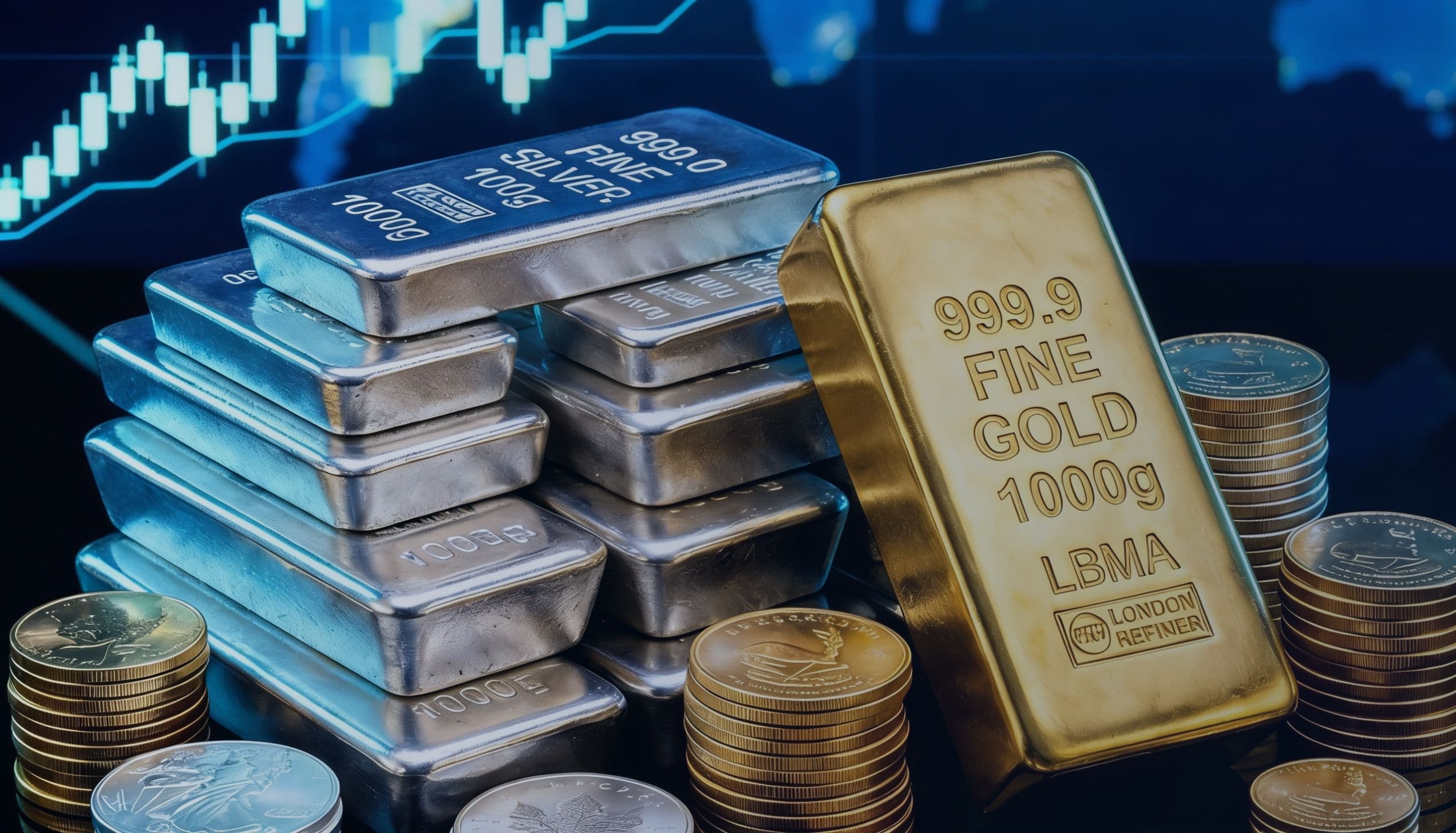
Import duties for gold and silver are now fixed at 15% (Source: Bloomberg); a fee increase intended to reduce the inflow of metals into the country. Shifting economic priorities means Forex reserves will be preserved for mass imports of more essential goods such as oil and gas.
Today, spot gold’s exchange rate relative to the dollar was down by 0.35% to $4,698.85 per ounce. Gold futures were up by 0.45% at $4707.8 per ounce while silver futures traded at $87.195 per ounce.
India's banks—the common mass importers of gold and silver bullion into the country—often pay in U.S. dollars for precious metals. While not a part of RBI’s official forex reserves, they highlight the mass buying action of Indian banks when it comes to gold, primarily acting as facilitators for the jewelry market.
The position of the U.S. dollar in the global economy means having an ample amount of the greenback ensures imports of essential goods and services into the country continues.
According to current estimates, the available reserves can cover up to 10 months of imports (Source: Bloomberg).
As countries come to grips with inflation in different ways, Indians are being asked to reconsider their favorite asset class for investment. Gold's demand in India is one the highest historically and is often purchased in bulk for weddings, gifts, and special occasions.
Major jewelry stocks in India such as Titan and Kalyan Jewelers took a hit on share price momentarily (Source: Bloomberg), but long-term demand suggests gold buying may pick up once inflation subsides.
The Indian rupee has consistently depreciated in value, losing its purchasing power to the U.S. dollar. According to Trading View, the following currencies have each gained more than 10% in value against the Indian Rupee over a period of one year (as of May 13, 2025):
- USD/INR: 95.5500 (+11.75%)
- EUR/INR: 112.0081 (+17.74%)
- GBP/INR: 129.1962 (+14.16%)
- AUD/INR: 69.0363 (+25.44%)
- NZD/INR: 56.7748 (+12.37%)
Final Outlook
The immediate combination of macro-economic factors is expected to weigh negatively on inflation. The government will likely need to encourage fiscal prudence among its largest gold importers alongside the levy to support Forex reserves. Gold’s cultural role suggests regular buying at the domestic level will continue either after inflationary shocks subside or as they progress.
Stay Ahead of the Market
Subscribe for the Latest Trading News
Get expert insights, market news, and updates straight to your inbox.