Summary
Semiconductors in 2026 sit at the intersection of strong AI demand and rising policy/geopolitical headline risk. TSMC’s expansion signals confidence in the AI cycle, while new U.S. tariff actions on certain advanced chips add uncertainty and volatility. For MT5 traders, the edge comes from execution quality and process, low spreads, fast execution, solid risk controls, and a structured news-and-levels workflow that avoids chasing spikes.




Thu, Jan 15
2 min
From TSMC Capex to U.S. Chip Tariffs
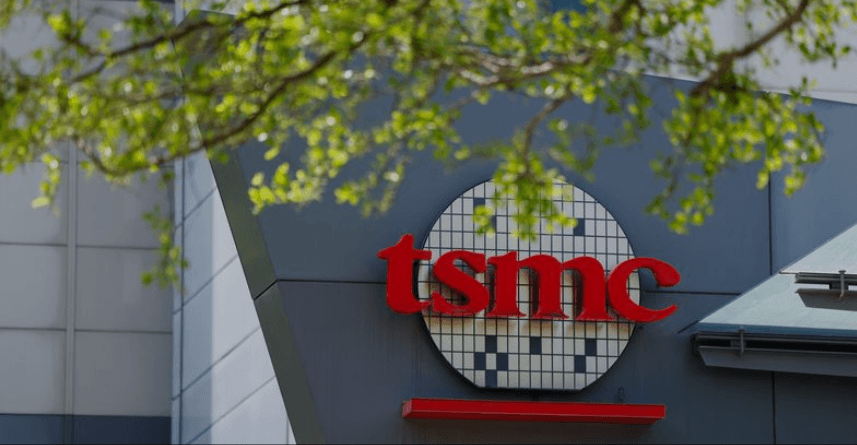
Semiconductors have become the market’s “heartbeat trade” because AI infrastructure spending increasingly drives not only chipmakers, but also cloud budgets, data-center buildouts and broader equity sentiment. That’s why a single headline, earnings, tariffs, export rules, or geopolitical risk can move US indices, USD and tech-heavy names in seconds. In early 2026, that sensitivity is rising: TSMC is leaning into the AI boom with bigger investment plans, while the U.S. is tightening its stance on certain advanced chips via a new national-security tariff approach.
The 2026 chip backdrop: AI demand is strong, but policy risk is louder
TSMC’s latest signals underline the same theme traders have watched for a year: demand for advanced chips tied to AI workloads remains a key growth engine and the company is planning a major step-up in spending to meet it. That kind of capex posture tends to keep the entire supply chain in play from foundry utilization and advanced packaging to memory and wafer-fab equipment.
At the same time, the macro overlay is changing. The White House announced a Section 232 proclamation aimed at semiconductors and related items, including a 25% tariff on certain advanced computing chips (the fact sheet cites examples like NVIDIA H200 and AMD MI325X), with carve-outs tied to U.S. supply-chain buildout goals. For traders, that combination strong structural demand plus higher headline risk, usually means wider intraday ranges, more gap risk around policy updates, and sharper rotation between “winners” and “avoid” names.
What Wall Street is doing: “selective exposure” is the new keyword
Research desks are increasingly framing 2026 as a year to stay exposed to AI, but be picky on where the risk-adjusted upside sits. For example, RBC’s sector initiation emphasized structural themes like high-bandwidth memory and advanced packaging, while explicitly labeling the environment as one where geopolitics and cycle positioning matter more. In parallel, broader coverage has highlighted continued bullishness on AI chip beneficiaries into 2026, while acknowledging volatility and valuation sensitivity.
This matters for retail traders because when institutions turn “selective,” price action often becomes more technical: breakouts fail more often, momentum gets choppier, and the market rewards execution quality and discipline over prediction.
How to translate this into an MT5 trading plan (without chasing headlines)
If you trade chip-linked moves through CFD trading, the edge is rarely “knowing the news first.” The edge is being consistently ready for the same recurring catalysts: policy headlines, earnings guidance, capex commentary, and risk-off/risk-on shifts that spill into indices. Using MetaTrader 5 (MT5) effectively here is about workflow -watchlists, alerts, and execution.
A practical setup starts with a “three-layer watchlist.” Layer one is US500 / Nasdaq-linked indices (for broad risk sentiment). Layer two is the chip bellwether complex (foundry + AI leaders + equipment). Layer three is hedges and volatility companions USD pairs, Gold (XAU/USD) and sometimes energy, because policy/geopolitics can move cross-asset correlations abruptly. When a tariff or geopolitical headline hits, indices can react immediately while single names catch up and that lag can create cleaner entries than chasing the first candle.
The execution keywords traders actually search for (and how they connect to this market)
When volatility rises, traders don’t just search for “a broker” they search for conditions that protect execution. This is where your platform and broker selection become part of risk management, not marketing. In 2026-style headline markets, the most common intent-driven SEO phrases revolve around speed, costs and reliability: MT5 trading platform, MetaTrader 5 broker, low spreads, tight spreads, raw spreads, fast execution, ECN broker, deep liquidity, low slippage, instant deposits and withdrawals, and regulated broker. If you’re running systematic strategies, the search shifts toward Expert Advisors (EA), algorithmic trading, MT5 VPS hosting, trading signals, copy trading, and backtesting-because strategy consistency matters more than “one perfect trade.”
For the GCC audience, you also routinely see intent around swap-free Islamic account, Arabic support and local payment methods, because those reduce friction during fast markets. The point isn’t to stuff keywords, it’s to acknowledge what traders are really trying to solve: execution stability when markets gap on policy risk.
Risk controls MT5 traders should tighten when tariffs/geopolitics drive the tape
Policy-driven volatility is different from earnings-driven volatility. Earnings often produce a single repricing; policy risk can create multi-day whipsaws. That’s why it helps to standardize three controls. First, define your “event windows” (major CPI prints, key earnings days, major policy briefings) and reduce size or widen stops accordingly, because spreads and slippage can expand. Second, use hard levels and alerts instead of “watching the screen,” because the best trades often happen when price returns to a prior level after the first spike. Third, separate execution styles: scalping and news trading demand the strictest spread/execution conditions, while swing setups can tolerate noise but need cleaner invalidation logic.
Summary
The 2026 chip story is no longer just “AI is booming.” It’s “AI demand is strong, and policy rules are shifting at the same time.” With TSMC signaling heavier investment to serve AI demand and the U.S. formalizing a tougher stance on certain advanced chip imports, traders should expect more frequent volatility bursts and more opportunity for those who trade with structure rather than impulse.
If you’re trading these moves via MT5, your biggest advantage is preparation: the right watchlists, alerts, execution conditions, and a repeatable playbook that works whether the catalyst is earnings, capex guidance, or a surprise policy headline.
Stay Ahead of the Market
Subscribe for the Latest Trading News
Get expert insights, market news, and updates straight to your inbox.